Ever found yourself puzzled over which tool to choose for measuring angles in construction? You're not alone.
Selecting the right tool is crucial, not just for accuracy, but for ensuring the safety and success of your project. Imagine having the confidence that every angle is precise, every corner fits perfectly, and every measurement enhances the integrity of your work.
With the right tool, this can be your reality. As you dive into this article, you'll discover which tool can transform your construction tasks from daunting to doable. Ready to unlock the secret to perfect angles? Let's get started.
Common Tools For Measuring Angles
In construction, precise angle measurement is crucial for accurate building. Different tools help ensure this precision. Each tool offers unique benefits and is suited for specific tasks. Understanding these tools is essential for any construction project.
Protractors
Protractors are simple and effective. They measure angles in degrees. This tool is usually semi-circular or circular. Protractors are perfect for basic angle measurements. They are easy to use and widely available. Protractors can be made of plastic or metal. They are often used in classrooms and workshops.
Angle Finders
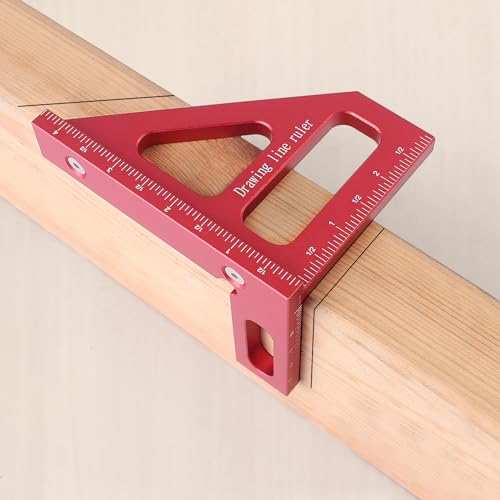
Angle finders are versatile tools. They help find and measure angles. These tools often have a rotating arm. The arm helps align with the angle being measured. Angle finders are suitable for various construction tasks. They provide a higher degree of accuracy than protractors. This makes them a favorite among many builders.
Digital Angle Gauges
Digital angle gauges offer precision and ease. They display measurements on a digital screen. This makes reading angles quick and simple. Digital gauges are highly accurate. They are useful for complex construction projects. These tools often feature magnetic bases. This allows them to attach to metal surfaces easily. Digital angle gauges are ideal for professionals seeking precision.
Protractors In Construction
In the world of construction, precision is everything. One seemingly small mistake can lead to significant complications. This is why measuring angles accurately is crucial. Among the various tools available, protractors stand out for their simplicity and effectiveness. They're not just for classrooms; they play a vital role on construction sites too.
Types Of Protractors
Protractors come in various forms, each suited to different tasks. The most common type is the standard semicircular protractor, perfect for basic angle measurements. It's simple yet effective, easily fitting into your toolbox.
For more demanding tasks, the digital protractoroffers precise readings. With its digital display, you can read angles quickly and accurately. It's like having a calculator for angles.
There’s also the adjustable protractor, which allows flexibility in measuring angles, especially in tricky corners. This tool is invaluable when working with complex structures.
Using Protractors Effectively
Using a protractor effectively can save you time and headaches. First, ensure the protractor is clean and undamaged. A scratched surface can lead to inaccurate readings.
Align the protractor with the edge of the surface you're measuring. This is crucial for getting a correct angle. Even a slight misalignment can throw off your measurements.
Don't rush the process. Take your time to read the angle accurately. Double-check your readings to avoid costly mistakes down the line.
Have you ever found yourself redoing work because of a measurement error? How did it affect your project timeline? Share your experiences to help others avoid similar pitfalls.
Remember, in construction, every angle counts. Whether you're building a simple structure or a complex design, the right protractor can make all the difference.
Angle Finders: Versatility And Precision
Angle finders are essential tools in construction. They offer versatility and precision. These tools help in measuring angles accurately. This ensures structural integrity in various projects. Angle finders come in traditional and digital forms. Each has unique features and benefits. Understanding these tools is crucial for construction professionals.
Traditional Vs Digital
Traditional angle finders are simple and durable. They often use a protractor and swinging arm. These tools are great for basic measurements. They require manual reading of angles. This can lead to human error.
Digital angle finders offer advanced technology. They provide accurate and quick readings. These tools display angles on a digital screen. This minimizes errors and saves time. Digital models often include additional features. Some have memory functions and data storage.
Applications In Construction
Angle finders have various applications in construction. They are vital in framing and roofing. Accurate angles ensure proper alignment of structures. These tools are also used in flooring installation. They help in fitting tiles or wood planks precisely.
In addition, angle finders assist in pipe fitting. They help in aligning pipes at correct angles. This is crucial for plumbing systems. Angle finders are useful in stair construction too. They ensure steps have the right incline.
Digital Angle Gauges: Modern Solutions
Digital angle gauges offer precise measurements for construction projects. These modern tools ensure accuracy in measuring angles, enhancing efficiency on site. Essential for builders seeking reliable angle assessments.
In the ever-evolving world of construction, precision is key. Digital angle gauges have emerged as modern solutions for measuring angles with accuracy and ease. These tools are a game-changer for professionals who demand precision and efficiency. Imagine being on a construction site and needing to measure angles quickly without second-guessing the results. Digital angle gauges make this possible, providing the modern-day answer to age-old challenges.
Features And Benefits
Digital angle gauges offer numerous features that cater to the needs of construction professionals. They are compact, easy to carry, and can be used in tight spaces where traditional tools might struggle. These gauges often come with digital displays, making it easy to read measurements even in low-light conditions. Additionally, many digital angle gauges have magnetic bases, allowing them to stick to metal surfaces, freeing up your hands for other tasks. The benefits are clear: faster measurements, increased accuracy, and the ability to work efficiently in various environments. With these tools, you can save time and reduce errors, ultimately enhancing productivity on the job site.
Accuracy And Calibration
Accuracy is paramount in construction, and digital angle gauges excel in this area. They provide precise measurements, often within a fraction of a degree, which is essential for tasks that require exact specifications. Regular calibration is crucial to maintaining this accuracy. Many digital angle gauges come with self-calibration features or easy-to-follow instructions for manual calibration. This ensures that your tool remains reliable over time. Consider your last project—did you find yourself questioning your measurements or redoing work due to inaccuracies? Digital angle gauges can mitigate these issues, offering confidence in your measurements and reducing the need for rework. Isn't it time to embrace these modern tools and elevate your construction projects? With digital angle gauges, precision is at your fingertips, ready to transform how you measure and execute tasks.
Choosing The Right Tool
Selecting the correct tool for measuring angles in construction is crucial. A protractor or an angle finder is typically used. These tools ensure precision and accuracy, essential for building stability and safety.
Choosing the right tool for measuring angles in construction can make all the difference in the accuracy and efficiency of your project. Whether you’re a professional builder or a DIY enthusiast, using the correct tool can save time and prevent costly mistakes. With so many options available, how do you determine which tool is best for your specific needs? Let's dive into the key factors that should guide your decision.
Factors To Consider
When selecting an angle measuring tool, consider the project's complexity and scale. For large-scale construction, durability and precision are crucial. Tools like transit levels and theodolites offer high accuracy, ideal for complex structures. For smaller projects, simpler tools might suffice. A protractor or angle finder can be both affordable and effective for basic tasks. Also, think about your comfort with technology. Digital tools like laser levels and digital angle finders offer precision and ease of use but require some tech-savvy. Budget is another factor. While high-tech tools offer advanced features, they can be pricey. Balance cost with the tool's utility for your specific project.
Matching Tools To Projects
Different projects demand different tools. For instance, if you're installing tiles, a simple angle finder or a T-bevel could be perfect. These tools help ensure even and accurate tile placement. On the other hand, if you’re aligning beams or setting out complex angles for a roof, a transit level or a theodolite might be necessary. They provide the precision required for complex geometries. Have you ever started a project with the wrong tool and found yourself struggling halfway through? Choosing the right tool initially can prevent such frustrations. It’s like having the right key for a lock – it just works effortlessly. Think about the tools you've used in past projects. Which ones made your job easier, and which ones complicated it? Reflecting on past experiences can guide your choice. Consider the future as well. Investing in a versatile tool might be beneficial if you plan to tackle varied projects down the line. Making informed decisions on tools not only enhances your project outcomes but also boosts your confidence in handling construction tasks. So, which tool will you choose for your next project?
Innovations In Angle Measurement
Construction projects today are more advanced than ever, thanks to innovations in angle measurement tools. These tools have not only improved accuracy but also increased efficiency on job sites. Imagine measuring angles with precision that was once unimaginable. Such advancements have transformed how we approach construction, making tasks quicker and less prone to errors.
Technological Advances
One of the most exciting developments in angle measurement tools is the digital angle finder. Unlike traditional protractors, these devices offer real-time digital readings, allowing for immediate adjustments. Laser-guided tools are also gaining popularity, offering pinpoint accuracy over longer distances.
Applications are now available that integrate with these tools, storing data directly on your smartphone. This integration allows you to track multiple measurements and ensure consistency throughout the project. Ever thought a smartphone could be an essential tool on a construction site?
Impact On Construction Industry
These technological advances have had a significant impact on the construction industry. With digital and laser tools, the margin for error has drastically reduced, leading to more reliable structures. This accuracy saves time and money, as fewer revisions are needed.
Moreover, the ease of use of these modern tools means less training time for workers. The intuitive interfaces and instant feedback are a game-changer. Imagine training new workers in hours instead of days. How does that change your project timeline?
Innovations in angle measurement are more than just advancements; they are essential for meeting the demands of modern construction. As you consider your next project, think about how these tools can enhance your work. Are you ready to embrace these changes and improve your efficiency on site?
Frequently Asked Questions
What Tool Measures Angles In Construction?
The protractor is commonly used in construction to measure angles accurately. It helps in ensuring precision in various construction tasks. Protractors are available in different forms, including digital versions for enhanced accuracy. Their ease of use makes them a preferred choice among construction professionals.
How Does A Digital Protractor Work?
A digital protractor uses electronic sensors to measure angles accurately. It displays readings on a digital screen for easy interpretation. Digital protractors are favored for their precision and ease of use. They help in achieving accurate angle measurements, critical in construction projects.
Are Protractors Used In Carpentry?
Yes, protractors are widely used in carpentry for angle measurements. They assist in creating accurate cuts and joints. Carpentry projects often require precise angles for perfect fitting. Protractors ensure that these measurements are precise, contributing to the quality of the finished product.
Can Angle Finders Replace Protractors?
Angle finders can complement but not fully replace protractors in construction. They offer convenience in measuring angles quickly. However, protractors provide more precision and are preferred for tasks requiring high accuracy. Both tools are valuable in ensuring precise angle measurements.
Conclusion
Choosing the right tool ensures precise measurements in construction. Protractors and digital levels are popular choices. They offer accuracy and ease of use. Carpenters often rely on bevel gauges for angles. Builders need tools that suit their specific projects. Each tool has unique features and benefits.
Consider your project's needs before deciding. Accurate measurements lead to successful construction. Tools like laser levels help in advanced projects. Always prioritize quality and functionality. Proper tools enhance efficiency and safety. So, pick wisely and enjoy smooth construction work.